Showing posts with label Community capacity building. Show all posts

Sunday, June 10, 2012

The 10th Communities in Control Conference in Melbourne, May, 2012


It was really exciting to be attending the 10th Communities in Control Conference in Melbourne. In our invitation it says that it will be the last one and many of the attendees have certainly wondered about that purely because this conference is one of the most useful and beneficial conferences for the nonprofit sector in Australia that I can think of.

I was completely taken by the conference last year and this year is no difference. I think that attending is one of the best decisions I've made this year. The atmosphere of the conference just blows you away with it's excitement.

To me this year's Communities in Control Conference was a heartfelt reminder of the things I hold dear, which is working for the social justice and equality in the world.

It is really a noteworthy thing that while we are working in our daily tasks in the community and thinking that we are doing it for the good of the community and especially benefit those who are vulnerable in our society, we can easily loose the tread on what it means to be working for a good cause. Our struggles for funding and other opportunities often shift the focus to things that lead us to pettiness and fragmentation, away from the real issue, which is to maintain social justice in our community and nation.


The Communities in Control Conference works to restore the balance helping us to hold on to that big picture. It gives us some worthy suggestions on who to follow in order to get to the right information, that 'right stuff' in maintaining our knowledge base on where the world is at this particular moment in the human rights and social justice area of things.

I was literally blown away with the discussions in this year's conference on many subjects. Last year, I was really impressed but this year's conference managed to catch my attention at every turn. My mind was captured at every moment, with every speech and every speaker.

The Hon Peter Ryan, the Deputy Premier of Victoria rightfully questioned the invitation to this conference as the last communities in control conference. It is really right and proper that the format of the conference should follow the times and maybe change to something reflecting more of the so called modern times in media, but at the end of the day, it is the human beings in the conference and where else would we get such a wonderful possibility to meet new people whose concerns are similar to us or to listen to an oration on social justice with teary eyes. Not online, as the atmosphere is very hard to transfer through broadcasts. It is the human interaction that inspires and lifts us up to such new hights that ensure that we feel like we need to 'do something' about mobilising for building and maintaining social justice in our communities and the nation.


From the first speech at the conference delivered by Dr James Whelan from the Centre for Policy Development about the 'Big Society' movement and it's possible effect on Australian society, I was holding my seat in awe of how much information I had been missing while concentrating on my own organisation's struggles in gaining a threshold in service delivery in our area.

I had not noticed how the global impact of the Big Society ideal has been creeping to my world without me giving it any deep thought. Luckily, I can now read the report that is published by the Centre for Policy Development online. I am looking forward to reading James Whelan's analysis and research and by doing so acquiring some tools to encounter the signs of the Big Society taking over my consciousness.


Associate Professor Natasha Cica, the Director of Inglis Clark Centre for Civil Society in Tasmania had recently published a fascinating book, called Penner Dreaming about the stories and the pictures taken around the disappearance of the lake Penner in Tasmania during the 1950's. She also told us some touching stories that will be part of her next book on the Polish refuges from the WW II to Australia.

She raised a question on where do we need to take our stand in being responsible for our own actions despite the systematic possibility for compromises in human dignity some dictatorial nations (like the nazi Germany) provided or provide for performing heinous acts in the name of the ordered society. Her speech left me with wonder and a desire to buy her book for further reference.


Renowned health sociologist Dr Samantha Thomas from the Monash University spoke about the scare campaigns that are rampant concerning obesity and gambling.

She held the view, backed by her research that the individuals and the communities involved should be part in finding solutions to the problems. That is the only way to gain insight and really make a difference in removing some obstacles from finding dignified ways to solve the problems. The results of the scare campaigns only lead to more harm done to the society at large than ensuring that there is real outcomes for the people and communities involved. A very inspiring speech, indeed.


My favorite speech for the first day was delivered by George Magalogenis, an Author, Journalist, Political Commentator and a Blogger. It was a very intellectual speech and covered a lot of ground in Australian politics and the history of politics. I now look forward to reading his book, the Australian Moment and making sure that I read some of his blogs to keep up with the political atmosphere in Australia in relation to the global issues.

The first day ended with Judith Lucy's hilarious comedy performance that left me giggling and a little embarrassed, long after exiting the conference room, which I am sure was just her intention from the beginning.

THE SECOND DAY

If the first day of the conference, in my opinion, was excellent, the second day easily topped it and ensured that the participants left with renewed spirits and an eager mindfulness about social justice issues that we need 'to do something about'.


The day began with Margaret Simons, a well known journalist, author, academic and the founder of YouCommNews talking about the end of journalism as we know it. "There might not be journalists as we know in 20 years but the will always be acts of journalism." We do live in an age where everyone can publish, anything and everything online.

She held a positive view to the worldwide fragmentation of information and news and said that even though it might be fragmented, with a little bit of effort, it is possible to find 'the good stuff'. An audience needs to choose carefully who to follow to get to the unbiased, well researched news and act of journalism. It is all in the skills of how to navigate through the maze of unnecessary information flow.

Her speech left me thinking that a community organisation such as in which I work at or indeed any kind of modern business that is working to help the vulnerable people in the community needs someone who can keep up with the big picture that will help us to guide the organisation to informed decision making.


Scott Riddle, the Strategic Syndication Partnership Manager for Google then followed the lead of Margaret Simons and informed us of all the new technology, help and systems that Google.org, the nonprofit part of the Google business has actually already put in place to help the nonprofits of the world online. He talked about cloud computing and raised concerns in the audience about privacy issues. He acknowledged all the concerns and said that they were really good points and that Google was certainly putting a lot of effort into dealing with such issues as privacy etc.

I was quite fascinated by The OurSay Panel that followed. On the first day, the participants had been invited to log on to the OurSay.com, write down the question that we would have liked to be answered by the politicians and vote on the questions that others had raised. The three top questions were then presented to a panel consisting of former and current, local, state and federal politicians.

What was interesting was to hear their point of view to the questions raised. It left me with a definite aim to actually look more deeply into this kind of online mobilising of the public behind important questions that need our attention.


Next Damian Ogden, the founder and Executive Director of Campaign Action and an Obama Campaign Advisor give us his insights to how to organize meaningful campaigns for a good cause.

I was really impressed by his high ethics in planning and mobilising people behind worthy causes. I am sure that the program his company runs would benefit anyone who is in a process of thinking about what to do about concerns and how to go about doing whatever it is that needs to be done. I certainly will take this up anywhere I go and talk about the social justice as an issue to be raised in relation to building equality in our nation.


After that, it was time to announce the the winner of the Joan Kirner Social Justice Award winner and to listen to the Joan Kirner's fantastic Social Justice Oration. It truly made my day by reminding me and everyone else why we are working in the community. It is to help others and the world to reach the goal of Social Justice all around the world.

I do not think that there was a dry eye in the audience while listening to the Joan Kirner's speech. It was a heartfelt reminder to us all about the huge work that is there in the community and society for those who set the goal of helping nations to equality, peace and freedom as a main purpose of their life's work.

A really worthy cause to follow and I am looking forward to seeing where the new forms of the Communities in Control Conferences will lead us.
- Posted using BlogPress from my iPad

Sunday, April 15, 2012

LAPPSET Seminar in Brisbane; From Children's and Senior Parks to Intergenerational Play


Community capacity building has been a passion for me for the past five years. As a Service Manager for Finncare, Home and Community, Aged Care Services for the Australian Finnish community, I noticed that it is really hard to inspire people who have been guided to passivity in their retirement to revitalise their interest in recreational sports and fitness. If we think that it is hard to pick up a new habit as a young person, how hard would it be to change your attitude when you are set to the end of life path already at the age of 65.

As a Director, responsible for providing community care services for a large community in every age group, I have come to realize that intergenerational solutions are the best and most effective in terms of getting the community involved in their own wellbeing. Promoting healthy lifestyle is most efficient when everybody has the change to be together in the same space. It could be at different times of the day but it is the connection to the community and the feeling of belonging that is important.
My search for inspiration for Intergenerational Play has long roots, starting from the cultural dance and games that were such a wonderful experience for me as a young person. The connectedness to friends, family and community can not be stressed enough when talking about what inspires people for community involvement and healthy lifestyle. If there is a reason to be mentally active, live longer at home, be involved in the world, then my experience shows that it is easier to take up new habits to enhance that wellbeing.


Recently, I attended an innovative Seminar on Parks and Playgrounds in Brisbane, organised by the LAPPSET Group. They are playground equipment specialists from Finland and the leaders of the multi-generational playground design concept.

The Lappset Seminar introduced the participants to innovative ways of looking into public playground design, from defining who are the park equipment uses to suggesting practical ways to new playground design.
Many interesting talks were given explaining the necessity for careful understanding of the community needs, of planning suitable playgrounds to meet these needs and ideas on how to implement the whole Intergenerational Play concept to the modern way of life.

From Tuire Karaharju-Huisman, a researcher to aging population from Melbourne, I learned that by 2017, 15% of Queenslanders are over 65 but only 43% of people between 65-75 are active enough to keep them in good health. It is of grave importance for an aging person to be agile enough to avoid falls that can lead to permanent health risks. Walking alone is not enough to keep the kind of personal fitness, strength, balance and flexibility that enables a long healthy lifestyle. What is needed is some planned activities that are especially designed to maintain personal fitness and health.
One good example of the national focus on Senior Parks is found in Spain, where there are more than 1000 parks designated to promote Senior Health. This doesn't mean that they are for the seniors alone as many parks are used for different age groups during the different times of the day. This requires that they are planned to be diverse enough for everybody. The focus then shifts to designing a suitable play area where multi-generational play is possible.

On the other hand, I was made to understand that young people have their own needs and many times it is important to take into account that they might want a whole park devoted just to their entertainment. The huge success of Parkour in the designated parks points to that. There again, it is essential to note that boys and girls learn in a different way.
According to Ali Kadhim, the Australian Parkour Champion, boys learn to jump and then land as opposed to girls who train to land before learning to jump. And up to now, I haven't even mentioned the original mass uses of the playground equipment, the children under 10 where there are such noted enormous differences in age play that for example 4 and 7 year old children do not even play together, not to mention in the same way.

Ali Kadhim pointed out that in today's society where all the children are being supervised and all the risks for harm are carefully measured, there is a need for children and youth to search for their limits in order to develop their self-confidence. Parkour, for example, let's the kids find their own strength and limitations in a safe environment.

Jenette Blake, from Queensland Health called for everyone 'to consider taking physical activity out of the gym and into the playground' where intergenerational community involvement would enhance the general wellness and wellbeing of everyone. According to her, public parks are a cost-effective way to promote healthy communities. She also noted a changing public perception that encourages community evolvement.


Petteri Ikäheimo, the Asian Manager for the Lappset Group said that 'it is about doing things together', that if adults play together with their children in the playground, they are inclined to spend longer time there. The imperative, then, is to design the equipment so that it enables multi-generational play.

Well, after a day like that, who wouldn't be convinced? Especially, after we went to visit the Riverdale Park in Logan, where there is a wonderful playground, designed by LAPPSET where we were able to witness a marvelous Parkour demonstration by Ali and his Team9Lives mates.
In conclusion, I can say, that the attendees to the Lappset Seminar now have a considerably better understanding of the Intergenerational Play concept in global and multi-generational perspective. I feel that my passion for the Community Capacity Building has been enhanced and that I now feel even more enthusiastic in my goal to help to further Healthy Communities through striving to provide more opportunities for Intergenerational Play.

I sincerely thank the organisers for providing us with such a pleasurable and informative day and I look forward to working towards the realization of a dream where we could have more such interactive playgrounds in our own communities.

The Pictures in this blog are:
1. Rivedale Park at Logan, Queensland. A Parkour friendly design.
2. Team9Lives from Sydney
3. An inspirational quote
4. Ali Kadhim showing what he can do
5. Me testing my fitness, strength, balance and flexibility
6. Team9Lives Parkour demoinstration
7. An example of multi-generational playground equipment
8. Some Seminar participants at the Riverdale Park. In the forground Tuire Karaharju-Huisman

- Posted using BlogPress from my iPad

Friday, October 7, 2011

Contemplation on Newly Learned Goal Setting Methods and Futuristic Thinking Processes


Recently I attended two very interesting small workshops about goal setting and futuristic thinking processes.

The first one was a lunch workshop at Jimboomba organised by the Logan Country Chamber of Commerce, the second was an inspirational breakfast talk organised by the Westside Business Women at Springfield Lakes. Both were concerned about the future, one with a personal focus and the other with a more of a global business focus. Both were about creating that little edge that makes us reach for more and allows us to dare to take a premeditated leap of faith towards the presently desired future possibilities.

From both seminars, I acquired a book. Paula McSporran gave me a link to her eBook The Smart Start; The Basics of Goal Setting and Craig Rispin let me download the eBook version of How to Think Like a Futurist; Know First, Be First & Profit First'.


My experience

For many, many years I have recorded goals for myself and my businesses. Every now and then I have picked up a new method on how to evaluate my existing situation and how to set new goals for the future. I have received lots of mentoring and advice on what would be the best way to take action.

Mostly, I have succeeded in determining what to do and how I wanted to go forward with my life. Mostly, I feel, it has been determination, positivity and good luck that has brought me there. I feel that I have gotten everything I ever really wanted and much more of what I never consciously knew I wanted. Does that sound familiar?

I have 30 years of records on my methods of personal goal setting and action taken from that. For the first 15 years, I followed a very simple advice from the collective of feminist mentors by traveling around the world in conferences, picking up trends and researching the accuracy of them in relation to the Scandinavian situation and taking social action for Human Rights, especially Women's Rights.

The last 15 years have been more structured. I have followed many leads and methods from doing all the exercises in the Experimental Guide to James Redfield's The Celestine Prophecy to experimenting with affirmations learned from Victor Boc's How to Solve All Your Money Problems Forever. I also have been inspired by many motivational speakers that have given advice on goal setting.

Paula's workshop

I was very intrigued by the simple and strait forward manner of the goal setting method Paula McSporran proposed in her workshop. It is to write a story of your 'best year yet' dated one year from the day you are writing it. The story will allow you to imagine what you really want to do in a short time-frame.

The next step is to write down what you need to start, maintain and finish in order to create your 'best year yet' in quarterly sequences. The most important step is to take action to realize your goals into reality.

This means that if you want to travel overseas for Christmas, you actually need to book your flights or if you are looking for a job, you have to write an application and send it. Wishful thinking is not productive for efficient and clear goal setting.

Re-program your brain

The most important reason why you need to be clear of your goals is that it will re-program your unconscious brain to work for the goal and attract situations that will aid in realizing your desired future.

One interesting recently released movie called 'Source Code' is based on the quantum hypotheses that there are many possible futures for us and that every decision we make will create a new pathway into the future. The goal setting processes rely on much the similar idea. Once you have programed your brain to focus on a goal, your unconsciousness starts drawing suitable circumstances your way to make it a reality.

What if you want conflicting things?

After the workshop, I went home and wrote a story about my best year yet based on what I felt and wanted on the day I wrote it. That was two weeks ago. I also took action on the most obvious things, the once I have control over. Now things have changed.

Since most of us look at life through our emotions rather than cold reasoning, it is about right that we would have conflicting feelings on a daily bases. So, now I need to write another story. The good thing is that, our brain is so plastic that it will re-program itself any time.

My conclusion from this experiment is to write a new story of the 'best year yet' every couple of months. That will enable me to determine what it is that I really want. After that exercise I probably will have some real goals for starting, maintaining and finishing.

A huge thanks goes to Paula for her practical advice. I think it is really important to start somewhere and keep on doing it.

What about the futuristic thinking?

Incidentally, a week from Paula's workshop I attended a breakfast talk by a professional futurist and a motivational speaker Craig Rispin. That allowed me to think of the future more in terms of the 'bigger picture'.

Craig is a very inspiring and enthusiastic speaker. It is impossible to get a still picture of him while he is talking. This probably is a good demonstration of the fact of how quickly the world is moving towards the future.

In 30 minutes, I learned a lot about how to think like a futurist. For example, we now have 468 million mobile net devices in the world. We are in the digital age and it has to be taken into consideration when determining business goals and strategic plans for the organisations we work for.

I also was reintroduced to many successful past futurist thinkers. According to Craig a futurist is a reverse historian. I can certainly relate to that. After reading his book, I am thoroughly convinced.

When applying what I learned to community capacity building and aged care, I can definitely see that there is lots to take in. Futuristic thinking applies to all areas from how and where to place your marketing strategy to how to strategize for finding opportunities in the growing new communities around us.

After these experiences I am re-ascertained that innovation is the key, both to personal growth and the business growth. Thinking outside the box is immensely important for the future of humanity in the global digital future with the aging population.

References:

Boc, Victor (1997) How to Solve Your Money Problems Forever, Perigee Trade

Redfield, James & Adrienne, Carol (1995) The Celestine Prophecy; an Experimental Guide, Bantam Books

Link to Paula McSporran

Link to Craig Rispin


- Posted using BlogPress from my iPad

Saturday, September 24, 2011

Contemplating How to Build Strong Partnerships in the Community; Caddies and the James Homes Services organised the James Family Fun Day at Jimboomba Park

A few months ago two people representing the James Family Home Services came to my office. Their intention was to organise a Family Fun Day for the community and at the same time fundraise for our Community Care organisation. 
As a community organisation we would reap the benefits of this collaboration and together we could involve many members of our community in compassionate voluntary action in helping others.  This collaboration proved to be a real boost for building lasting relationships between local businesses and the Caddies Community Care Centre in Jimboomba. 
Organising the Fun Day itself was a huge challenge and the first attempt was cancelled due to weather. However, everyone was determined and the second planned day was a success.
Analysing the community partnership model
After taking part on many workshops on partnership building, attending relevant interagency meetings, local groups, committees and associations that enhance partnership building between the business community and the local nonprofit community organisations, I am left to thinking on what kind of community partnerships would be ideal in creating such a compassionate atmosphere that it would lead to businesses becoming active in voluntary engagement in the local community? 
My experience is that when I am attending meetings that bring together local businesses, such as The Chamber of Commerce or other associations enhancing business networking, everyone will mention their desire to be involved in the community.  The consensus is there. Everyone is interested and basically ready to get involved. How then can this desire be transformed into real action and support?
The Ideal components of local community action initiative
The first component is the human potential. Ideally the business owner is engaged in community participation. I find many women and men who have built a small business very willing to give back to the community in some easy and convenient way.
The second component is convenience. Community engagement must be inbuilt into the business structure. If a business owner is overworked and just involved in making ends meet, who has time for community involvement?  It is a fact that strategic involvement in the community brings in more business.  How, then, can we find a convenient form of partnering for the local community organisation and the local small businesses?
The third component is access to an agreeable community organisation as a partnering platform. This falls on the community organisations willingness to be accessible and involved in the local community social capacity building. Very often it is the struggle to grow and maintain the high quality service standards that prove to be the biggest challenge. Building partnerships with local businesses just is not in the agenda.
What about the image building
Ideally a local community organisation that is accessible to everyone and involved in helping those who are vulnerable in the community will attest to the values of humanity, impartiality, independence, voluntary service, unity and universality. This means the drive and willingness to include everybody in the community. It also means providing access to everybody without prejudice on the avenue. 
Still being involved with a particular business brand might be considered problematic. On the other hand, it is a normal practice of most of the large charities to partner with big companies to get more fundraising advantages. Just Google on the internet! Local community organisations can partner as well. The question is who would be an ideal partner?
The experience of partnering between JCCA and the James Family Services
In my experience JCCA’s collaboration with the members of the James Home Services proved to be an ideal partnering opportunity. As a nonprofit community care organisation we provide direct services to vulnerable people in the community. We provide aged care, youth and family support and emergency relief to those in need in our community. We also provide food services; food pantry and meals-on-wheels. 
James Home Services similarly provides direct services to clients in their homes, cleaning, lawn mowing and pet grooming. The small family franchises work their business in the community. While our aim is to involve everyone in voluntary service in helping others, they know everyone that could help.
Due to this our collaboration in organising the James Family Fun Day at Jimboomba Park was a success. The active, involved and compassionate people of the James Home Services were able to mobilise their group and other businesses in the day and at the same time fundraise for Caddies. We were able to use our organisational expertise in helping to organise the event, acquire licences and participation.
All in all this proved to be a wonderful start to successful partnering! I am looking forward to more in the future.


Saturday, September 10, 2011

Notes from the 'Innovate Symposium', Brisbane, August 2011


It has taken me a while to absorb everything that was going on at the recent 'Innovate Symposium' organised through Volunteering QLD and held at the Griffith University EcoCentre in Brisbane last month (18-19/08/2011) However, finally I have had time to reflect and can present my thoughts on the Symposium.

My First Impressions

Coming in to the Innovate Symposium, I was not quite sure what to expect. I had been looking forward to attending for months, ever since my friend Ehon (http://ehonchan.com/) who was one of the presenters, had invited me to participate.

Walking through the rainy bush to the EcoCentre at the Griffith University, Nathan Campus was like walking to another space entirely.

It is a lovely building, set in the bush near the main university covered by trees and vegetation. I felt that it was a really nice touch to arrange the symposium there. It somehow illuminated to all the participants, what the organisers wanted us to experience, an un-conference, where all would be possible.


On our arrival, we had to choose two pegs from the tree besides the registration desk that would represent us. During the day we would use these pegs to get to know the fellow participants better. It was a fun way of enhancing networking amongst the symposium attendants.


What stroke me most of the symposium was it's attempt to reintroduce to the minds of the participants the different ways of artistic expression and creativity that can enhance the innovation process.

That in it's turn reminded me that the original word technology derives from Greek and Latin 'techne' meaning the 'art' in a much broader sense as 'skill' or the art that derives from the knowledge of how to do things. It also reminded me that it is only in the last 200 years that we have separated the knowledge as science from the technology, it's practical art (McQuire, 2006).

It was a really welcome effort from the organisers to make us feel, in a practical way, the possibilities the artistic expression can and should be allowed to freely contribute in the innovation process. The artistic expression is a vital part of human creativity and can be applied anywhere, even in business.


The First Day

The first day of the symposium combined listening and learning through Panel talks, World Cafe type discussions and workshops.

We were introduced to several interesting projects, including the Community Gardens in Newcastle, Stratbroke Island Men's Shed project and North Queensland (Ingham) Rainforest Rangers by enthusiastic project leaders. All the experiences mentioned were products of the creative and innovative processes that in a wonderful ways respond to the needs of the members in different communities around Australia.

I could relate to each and everyone of the presented projects and immediately apply the knowledge of their experiences in my own organisation which is currently in the process of developing similar projects. It is really important to build new relationships based on inventive mindset.

I was very intrigued by the talk on the Creative Engagement in Action by Tal Fitzpatrick and also by our house artist Tashka Urban. They had a very practical approach to creativity and showed some very inspiring pictures that demonstrated creative inventiveness in action.

Suddenly, a poem, that was recited woke the historian in me. It was read as a demonstration of a new kind of approach to life as such, namely that 'life is not fair'. As a historian I, immediately, placed the poem solidly in the tradition of the Lutheran work ethics and was struck by the fact that, here, once again, the human memory shows it's shortcomings in failing to remember.

I discussed this with the participant sitting next to me. The question arose, should we forget or remember our history? Is in fact remembering, a way to stop us from innovating as we are naming the known and placing new potentiality in an old framework?

I have recently sat in a seminar on aging where the presenter reminded the listeners that it is only due to the progressive aging of humanity since the last 10000 years, that our technological inventions have come about in the first place. It is only due to the accumulated human knowledge that innovation is possible. Is it only the historian in me that grows frustrated when we blatantly miss a cue or is it something we should carefully think about in the process of innovation?


I chose to participate in Ehon Chan's workshop about the New Media. It was a really fun experience. Especially I enjoyed observing Ehon's wonderful enthusiasm and his thoroughly idealistic way of approaching subjects and issues. We should not be limited by our possible reluctance to learn about the new media. We should just embrace it as human potential.

The Rest of It

The second day of the symposium was spent in workshops on barriers to innovation, personal practice in transforming the barriers and applying design principals to practice.

What I took away from the symposium was the great stories that were shared by both the presenters and the fellow participants. There is a lot of experience that can be shared to aid the innovative process. There also was talk about the concept of 'living on the edge'.

Many of the participants I talked with felt that this has been our lot. Being there, on the edge, just about to fall to the precipice of the new and the unknown. The Symposium really brought forward the fact that 'living on the edge' is a happy place to be instead of the frightening place that we think it is.

Now, after a month, I still think about the Symposium. Suddenly, during a busy day, I stop and visualise the picture that was shown there of a huge war tank artistically covered with a pink knitted quilt. I smile and go about my day ready to continue my 'life on the edge' of it.

Reference:

McQuire (2006) Technology. Theory, Culture & Society, 23 (2-3)


- Posted using BlogPress from my iPad

Sunday, June 12, 2011

Notes from Partnering - Above and Below the Line – Workshop

Last week, I and 20 others were lucky to spend two fascinating days in a workshop about partnering fascilitated by Ian Dixon (Dixon Partnerships Solutions) and Max Hardy (Twyfords). They are specialists in engaging people in partnerships.

About a year ago they formed a successful trainer partnership and have since trained Primary Health Partnership Council members and their prospective partners around Queensland on how to set up partnerships and engage in meaningful and strategic conversations with each other. Through these conversations the eventual partners gain skills in creating, developing and sustaining productive initiatives that contribute to the health and wellbeing of their communities.

I was astounded that there is so much to learn about this. I found that there actually is a structure to building strong partnerships. The workshop proved to be a very enlightening experience. Until now I have just gone from the assumption that to form relationships and engage in conversations is human nature. But now I know that some are far better at it than others. Not only that but engaging skills can be sharpened and used constructively.


I have always been good at networking and have understood that building and maintaining relationships is a natural part of my work in the community. However, as a skilled engineer, Ian has dissected the process of building relationships. He has made it to a structured process that can be used to form and build strong and healthy partnerships that are productive until it is time to ‘move on’. Ian’s way of structuring the partnering course of action is very useful and practical. I am looking forward to applying the acquired learning to my daily work practices.

Ian and Max work very well together. They have combined their skills in workshop practice and can really engage participants. Max is the social worker of the duo.

In the workshop he facilitated the exercises around the partnership building by introducing us to such very useful relationship creating and building tools as ‘Appreciative Inquiry’ and ‘Strategic Questioning’. “Research shows”, he explained, “that the way surveys and enquiries are laid out affect the results.”

Well, we knew that, but it was a surprise to get to know that the very process of the enquiry affects ‘how we are’. It is better to enquire into positives of experiences than fix the problems with negatives.

We were introduced to David L. Cooperrider (2003) and Fran Peavey (1994) and their thought processes in enquiring about the positive in human experience and putting their questions in such a forward thinking way that it contributes to the desired outcomes. We then practiced our newly acquired skill in groups. It was a well-organised learning curve for us all. In just two days we came out with a highly useful practical skill set. We also met new people and formed new relationships.

For me, this is always the best part of the workshops I participate in, getting to know everybody, sharing experiences and stories. I am looking forward to receiving newsletters and connecting with my new prospective partners through work and through social media.


References:
COOPERRIDER, D. L. & WHITNEY, D. 2003. Appreciative Inquiry: A Positive Revolution in Change, San Francisco, Berrett-Koehler Publishers.

PEAVEY, F. 1994. By Life's Grace: Musings on the Essence of Social Change, USA: New Society Publishers.

Thursday, June 2, 2011

Notes from the ‘Communities in Control Conference' in Melbourne, Part 2

The Main Conference, May 29-30


In hindsight, the first thing I can say about the ‘Communities is Control’ Conference, 2011 is that I am really happy about being able to have taken part in it. ‘My Community’ has done a lot of work in providing the Australian Not-for-Profit (NFP) Sector and particularly the community organisations with a conference that as closely as possibly strives to meet our current needs for networking and updates us about the changing climate on where we work today. Without this conference I would have had to go to great lengths in trying to find out about the burning issues that many organisations are facing today while reviewing the sector or our changing relationship with the different layers of Government.

Sitting two days in a conference with about 1000 other people from all over Australia, often engaged in conversations was not such a hardship at all and I am considered a conference pro.

The second thing I noticed when coming to register was the people who had come to partake in the conference. They seemed to be from all walks of life. So many different kinds of communities were represented. It was easy to start a conversation with anybody and everybody. In fact, one didn’t need to know anybody beforehand to make friends.

For a Queenslander and a student at the Australian Centre for Philanthropy and Not-for-Profit Studies at QUT, it is quite interesting that I had to come to Melbourne to listen to Linda Lavarch talking about the Government’s aims in straightening up the tangle of regulations and laws in relation to the Australian Not-for-Profit Sector. She currently is a research fellow at QUT and also is the Chair of the Australian Government Not-for-Profit Sector Reform Council.

According to Linda, this Government, instead of just talking is ready for action in harmonising regulations, striving to cut the red tape and straightening out the prevalent problems of the NFP Sector.

The good news is that the Government has already installed the Office for NFP Sector. It will engage with the Sector as a whole with four working groups and look into:

• National Compact
• Harmonising legislation
• Reducing red tape
• National regulations

There will also be an overview of the definition of charitable organisation.

The other highlights for me on the first day were the Joan Kirner Social Justice Speech delivered to us from Brussels by Sharon Burrow, who is there as the General Secretary of International Trade Union Confederation (ITUC). She strongly advocated the international work the unions are doing in highlighting the blight of many nations in their treatment of the workforce, particularly women. The role of ITUC was also highlighted in its role of advancing social justice and equality to the world’s workforce. As a Finn, I was delighted to hear that President Halonen from Finland might have a future leadership role to play in this after she completes her time as President next year.

As a Queenslander it was also interesting to observe the role The Hon. Joan Kirner, the former Victorian Premier and the current Community Sector Ambassador to Australia, plays in the whole conference, not only through the social justice oration but through the warm atmosphere surrounding her and her ease in striking conversations with different members of My Community leading people as well as all the invited speakers.

As a newcomer to the community sector conferencing in Australia, it is interesting to observe that we have here a person who is highly respected and has a huge impact on the way the sector is conducting its business. As a historian, I can only remember similar kinds of conferences that I have participated in where one particular person has had such an impact in the women’s liberation movement during the 1980’s where the huge ‘feminist legends’ were still taking part in the conferences. It is clear from the conference that Joan Kirner is one of the big runner-ups for women’s advocacy in the Australian context.

I also enjoyed Hugh Mackay’s speech on his just published book What Makes Us Tick? It presented 10 social desires that we as human beings are subject to and that affect our community. It caused huge lines afterwards at the stand where his books were sold. It can be said to his credit that he signed every one of them, even though mine was the second last and he was already standing up as the next session was starting.

Miriam Lyons was a little bit fast in her speech pattern for me to catch everything she was saying about the book called More Than Luck but she was very witty and I was absolutely delighted to observe her smile and the first thing for me, when I get home is to download the book as a free eBook on the Website.

The last delight on the first day was the Choir of Hope and Inspiration [previously the Choir of Hard Knocks]. We heard the first ever performance of their first musical which will be performed in September.


The second day went from strength to strength.

Phil Ruthven presented us with a lot of statistics and forecasts for the future. Basically he said that we are now at the height of our lives in what comes to health, life longitude, wealth and wellbeing and it is only getting better. There will be more wealth, longer life expectancy and more health. That is the upside; the downside is that there will be a lot of change.

But we do thrive on change as human beings anyway, so the forecast is good, if we take it as such and apply a healthy ‘grain of salt’ to our expectations.

His speech very much made me to want to live longer in order to see for myself if he is right in his predictions. Living to 100 just might not do it. To succeed, that means that I now have to make sure to apply all the possible new inventions in health and wellbeing which he forecasts to be many.

The absolute highlight of the second day was the launching of Advancing Women: Women and the Order of Australia and the speech made thereafter by Elizabeth Broderick, Sex Discrimination Commissioner and Commissioner Responsible for Age Discrimination.

What has been the best part in the conference was meeting new friends. Even though we know that all the speeches will be online afterwards and that books can and will be bought the personal dimension of actually being there, participating in the discussions, meeting others, networking and starting to build those important relationships. There is nothing that can take away that.

It proves the point Hugh Mackay said about the desire to be connected. Through participating in this conference, we have strengthened our belief in grass roots communities and our conviction that people have power to influence change.

The conference organisers are very proud of the fact that with the help of Victorian Government funding and other sponsors, this conference has the lowest entrance fee of them all. That actually was reinforced time after time with conversations across the room as many told me that their boards did prefer to send them to Melbourne than pay an entrance fee in the nearer city, as counting together flights, accommodation and food with the entrance fee, the Communities in Control Conference still costs less than other competing conferences available during this month. Interestingly enough I was unable to find it on LinkedIn. Hopefully that will be amended next year.

Our new ties with the original ‘early bird’ group on Sunday held to the second day. It was nice to be able to say ‘good morning’ to people you know already and exchange experiences with them from time to time during the conference.

I also ran into friends from Queensland. There were many as a matter of fact. Observably, judging from the question times and counting the numbers, the Queensland participants to the conference were close to Victorian numbers.

All and all this was a very delightful conference experience, worthy of replay and recommending to others.

Wednesday, June 1, 2011

Notes from the Communities in Control Conference in Melbourne, May 29-30, 2011

Women Achieving and Flourishing

A Pre-Conference Seminar with Christine Nixon (Our Community & Women’s Leadership Institute Australia)

I am keeping my promise to report on my experiences at the ‘Communities in Control Conference’ in Melbourne. ‘Our Community’ has so far organised this conference for nine years but this year is my first time as a participant. It is really exciting.

My partaking was made possible with the kind support of Qld Health and Caddies Independent Minds, Drug and Alcohol prevention program for Youth-at-Risk which is funded with Qld Health CHIC funding. Already at the pre-conference seminar I was able to meet people who work with youth in other parts of the country.

From the start, it was a crash course in networking. As I was early to the seminar and did not know anybody, I needed to make friends and fast. Luckily for me all the other ‘early birds’ in our table were chatty and willing to share. Quickly we found that we all were keen users of the social media as a vehicle for networking. It gave a lively start to introductions all around.

By the time the official seminar started our table had found that we represented different States: Queensland, Victoria, Canberra, South and Western Australia and worked in a wide variety of services from fundraising and education to aged care and youth support services.

We established that we had all come to the seminar because we had been inspired by Christine Nixon’s work as a former Victorian Police Commissioner and as the Chief for the Victorian Bush Fire Recovery.

Previously, I had also been told by another participant that this particular seminar opened up a new area, namely leadership skills as a pre-conference seminar for ‘Our Community’. “Usually”, I was told, “the seminars have been about fundraising or grant writing.”

This one was particularly aimed for women and 120 of them turned up as duly invited to the seminar. It shows that there is a great call for this kind of seminar and that it was a good move on the part of the organisers. Each table had approximately eight places. They made a working group each.

At first we were introduced to ‘Chatham House Rules’ by our facilitator, Christine Nixon. They mean: ‘What is said in the room, stays in the room’. In her outline, she was adamant that the seminar would be a safe place for personal discussions and that respect would be shown to all participants.

First discussion:

Known achievers in female leadership.

We were asked who the female leaders we admired the most are and what qualities we think they could give us. Obviously Christine Nixon was high up there as an admired female leader.

I found it interesting that many people mentioned their local female council members and Mayors as most admirable. Obviously many also admired Joan Kirner. Not so many world leaders were mentioned apart from the Queen and Oprah Winfrey. Mostly, it is those near us like our own teachers and managers that make the deepest impact on us and so influence our future. Observably, I was the only one who counted in legendary feminist world leaders apart from Indira Gandhi, who was mentioned. No other historical leaders were mentioned.

Here is a summary of how an admired female leader looks like according to the seminar.

She:

• Has lived the work and the family balance
• Has a belief system and a conviction
• Is authentic
• Is collaborative
• Is very respectful of others
• Uses a gentle form of influence
• Advocates
• Is compassionate
• Is resilient and determined but does not have to take on male traits to achieve it
• Translates ‘mothering’ as a leadership quality

Second discussion:

How to grow to become a good leader?

Christine outlined a woman’s possible pathway to a leadership role. In many cases she used herself as an example. It is why we went there, to learn from her experience as a for-runner for female leadership with heart in the tough male world of the Australian Police Force. In my observation she exhibited a quality of inspiring positivity which was recognised by the audience. We were hanging on her every word.

According to Christine, the early stages of leadership growth are shaped by the personal environment. The people around us influence us and show us the way. Often we just ‘go along'.

Very soon, though, an aspiring leader shows itself in the form of the development of direction and the show of resilience with the blending of values. ”A leader learns to lead” and soon has her own voice.

An ever growing leader blends her experience with reflection on her own and other’s behaviour. It is a tough thing to do, but the learning curve is worth the trouble. There is always a way to work through the tough parts. For Christine Nixon it is: “Layering the experience, having a go at it and learning from it.”

In the handout, we are recommended to read R. Kegan and L. Laslow’s (2009) book Immunity to Change (Harvard Business Press) as a practical source for good leadership strategy.

They say that a good leader:

• Reflects on their own and other’s behaviour
• Is able to handle contradictions
• Is flexible and can see both sides of the argument
• Leads to learn
• Makes sense of the situation at the time
• Selects, focuses and drives forward
• Is able to sort the ‘wheat from the chaff’
• Is openly ready to take on information and different points of view

Third discussion:

Managing people means ‘unlocking potential’

In this part we discussed the kind of managers we have encountered. On average it is found that each person has experienced two inspiring managers in her life. They are the ones we can ‘walk over hot coals’ for.

They:

• Have strong rapport with us
• Have presented us with a safe environment
• Are worthy of our trust and respect
• Are empowered
• Care about our professional development
• Did what they say they do
• Show patience and humour
• Are inclusive

Mentoring is a way to enhance women’s leadership traits. It was highly recommended as a positive action. It ensures the continuity for female leadership. Emotional support is also recognised as important.

Christine highlights a survival strategy: “Don’t take yourself too seriously and focus on financial, physical and emotional wellbeing. Have a plan.”

Fourth discussion:

Focus on ourselves

We think about what barriers we face in achieving a leadership role. We find there are many:

• Being afraid
• Imagination
• Circumstances
• A limiting self-belief system
• Fear of success
• Lack of self-discipline

Christine asks us: “Has anyone ever told you that you are never going to amount to anything?” Many participants have experienced this. Many find it a constant struggle to overcome the barriers.

Christine tells us her favourite line on how to endure: “This is not a sprint, it is a marathon!” She has heard it from some wise person in her past as a comment. It pretty well reflects everyone’s idea about overcoming the huge barriers women in general still face in leadership roles is many work environments. I certainly see that as a long-time advocate for women’s and human rights.

Luckily this seminar has demonstrated that most of us can name an admired female leader more close to home. One we can learn from and mirror, if we are so inspired.

Concluding remarks

When Christine was asked about her management style, she said that she uses ‘the shared leadership model’. She also translates the ‘good parenting model’ of “I do not like that behaviour but I love you” in her leadership practice. She tells us she used ‘support and pressure’ model in order to get results as a Police Commissioner. As an example she tells us about working towards lowering the number of stolen cars in Victoria, or lowering the number of domestic violence cases. She tells us to think about “what is real” and to have ‘a sense of yourself.” It is really beneficial to think about who you are. It is also important to admit to mistakes.

About criticisms and those who want to put us down Christine advices: “Have a look at who your critics are.” There is a need to make a decision about the people criticising you, to decide if listening to them is beneficial for the direction of your future.

Lastly Christine quotes Oscar Wilde: “Be yourself because everybody else is taken.” This is good advice to us all.

To say the least, I enjoyed this seminar very much. It was a really inspiring experience and gave me a chance for reflection. Many fellow participants along with me liked the fact that we got the Certificate of Recognition at registration, right at the start. Only showing up was enough to be recognised.

I am really looking forward to reading Christine’s book. It is called Fair Cop and comes out in August.

Since this report is put on my blog a few days after the seminar, due to the Internet failure in my hotel, I can also report that I had many follow up conversations on this seminar. I had these conversations not only with the participants on my table but also with others, including men who the participants have talked enthusiastically to about the seminar. What did strike me the most was the accuracy of the proceedings that was recounted back to me.

It is very positive to know that the seminar had an effect beyond the day it was held.

Tuesday, August 31, 2010

Introducing Jimboomba Park Retro Exercise Trail from the 80’s

An exercise trail in Jimboomba Park demonstrates that public health has been in focus for quite a long time with the community capacity builders.

Previously in a few of my blog postings I have introduced the concept of Senior Park and LifeTrail for community sports and recreation enthusiasts. At the same time, I have been pondering what is it that seems to stop me from actively implementing my awareness that regular exercise is crucial to my wellbeing and actually take it up as part of my daily activities. Also, I have been investigating what kind of play/exercise areas we need to develop to enhance public health for all ages through our community care organisation.


I can say that I am seriously interested in my own and other people’s wellbeing. I can be relatively easily persuaded to group activities and anything energetic that would relate to my work as confirmed by my interest in travelling around and investigating what is available. Yet, somewhere there is a wide gap between this interest and actually doing it. I would like to help everyone, including myself to close this bridge. I feel that I now have to start from the nearest and easiest park available to me at
work.


Jimboomba Park is situated right next to the Caddies Community Care Centre, where I work. I drive past it every day and sometimes I have taken part in some events, like The Vibe or other youth events organised by my own staff. I know there is a walking group organised by us that uses the park early mornings. Our Community Service Delivery Coordinator is doing everything she can to get people enthusiastic about healthy lifestyle, food and activities. There is a scooter and skateboard track there, which is often full of young enthusiasts. On a weekday I very seldom see any other people in the park or the playgrounds. So, I decided to go there on a Saturday instead.


The concreted retro trail is approximately 120m long. There is an exercise station at every 20 meters. I couldn’t really call them equipments in a modern sense, except maybe for the monkey bars. Rather, they are small items placed on soft surface to help those who complete the trail to do a particular exercise, like hopping over a log or walking a plank for balance. There is even a two train monorail that was a popular feature in the 90’s parks. Unlike modern outside exercise equipments these items are not designed to actively aid with the exercise itself. Rather they are there to provide a platform for a movement or action. However, similarly to modern trails, a good trainer or physiotherapist can do a lot in guiding people to do a right exercise with the help of a particular station to enhance and keep their physical abilities in good shape longer. The difference is that the new equipment and playgrounds are designed to enthusiastically help to attain results. It is a further developed concept from what is provided here that applies the modern efficiency approach to sports and recreation standards. The new playground equipment comes complete with the research results about how efficient they are in aiding the exerciser’s goals.


Yet, I had a very good half an hour walking down the trail and trying all the stations and so did the few families, I did encounter. I am quite convinced, though that with some deep analysis of what is needed and suitable for particularly set aims, we will be able to develop a suitable activity area for both young and old to have professionally guided activity groups that really enhance our physical wellbeing.

Monday, August 30, 2010

Having a great day at the Caddies Community Care Centre in Jimboomba

Demonstrating success towards attaining results in community capacity building

How would a great working day be defined? Is there a standard criterion? What would it take to say that a particular day in a working life has been great, wonderful and thoroughly enjoyable? Well, we had a day last week at Caddies in Jimboomba where I work, which in my mind can qualify as a grand day. Lucky for me, on that day we had a pleasure to be visited by Councillor Hajnal Black from the Logan City Council and I was equipped with a camera. As the day went on and the pictures piled up, its particular meaning suddenly became quite clear to me.

Is there a criterion for a great day at work?

For me a criterion is set by what kind of outcomes I would like to achieve from a successful day’s work. I have been pondering what makes a great day at work for other people. In my mind I would deem it a wonderful day if I can actually see a positive influence my work experience and commitment has on people and service outcomes. It would make the work worthwhile and would colour the day great.

As the Director for the organisation, I set my goals in relation to the mission, vision and the philosophy of the organisation. In this case the Jimboomba Community Care Association Inc which exists to enhance the wellbeing and social capital of our community. The Community Care Centre from where we operate is the centre of our activities in the area. From there we demonstrate our presence, our values and our commitment to the wellbeing of the community surrounding us. According to the 2006 census some 41000 people are anchored through our service provision to the community in the Logan and Beaudesert area. It is a huge challenge.

The organisational plan is set to encompass all our services: Caddies Care Services, Caddies Food Services, Caddies Community Welfare, Caddies Family and Youth Support Services, both funded and unfunded, and all the Caddies Community Care Centre activities. On the care service front our aim is to achieve an all-inclusive best practice, high quality service delivery and on the centre activities front a genuine presence in the community as a place to participate, meet and interact. My role is to lead the organisation to greater achievements and balanced service delivery for all in our community. Positive outcomes in an organisation can only be achieved by a great team effort, a committed Management Committee, staff and volunteer participation. First of all it requires attitude! Luckily, we have the IT factor. I can only commend the staff, volunteers and all involved in their commitment to the organisational outcomes.

Personally for me a great day is when I come home in the evening inspired, happy, full of future plans and ready for more. I might even take up some vacuum cleaning and cooking without any bother. Achieving organisational and personal goals, just for one day, calls for a celebration. My feeling is that we have now set the standard and can aim at repeating it again and again in rabid succession.


What did this remarkable day involve?

First and foremost the day was full of activities at Caddies Community Care Centre. The place was busting with children, parents, grandparents, volunteers and other visitors. The JCCA staff was at their most efficient and the facilities were in full use. Every function room, including the courtyard was occupied. The Food Pantry was busy, too. As the day happened to be the National Meals-on-Wheels Day, MOW staff and volunteers were celebrating. Now we know what we can achieve.

We greatly appreciate Councillor Black’s visit to the Caddies Community Care Centre. Through the day we got to demonstrate that well planed and defined cooperation with local council and community results in more community participation by the members of the said community. The pictures clearly show how much fun we had on the day and how good it turned out to be.


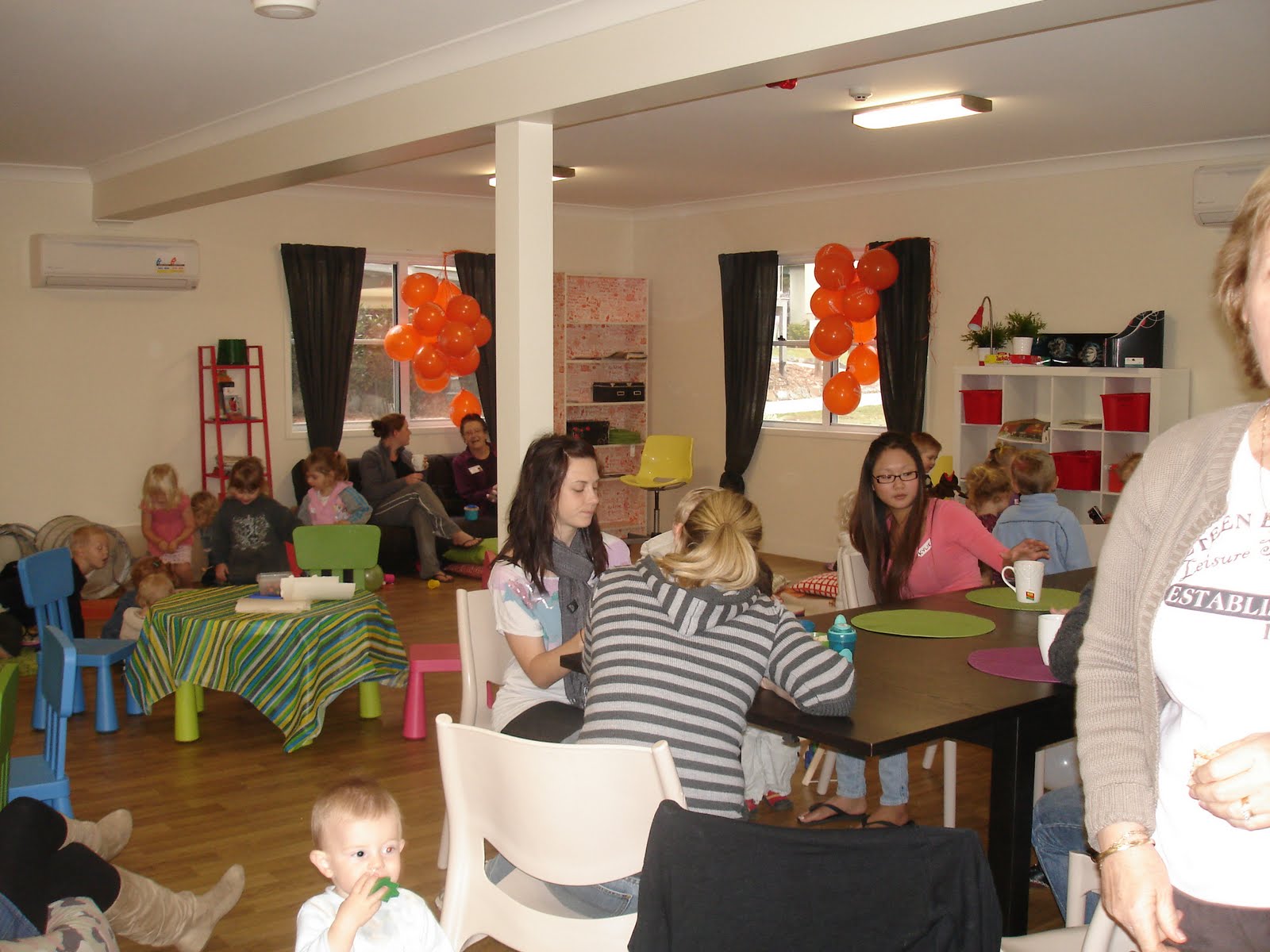
Parent/grandparents support group and the Chatterbox.


New Mothers group and Parents and Bubs Fun.


Caddies Meals-on-Wheels volunteers in training and at lunch.